
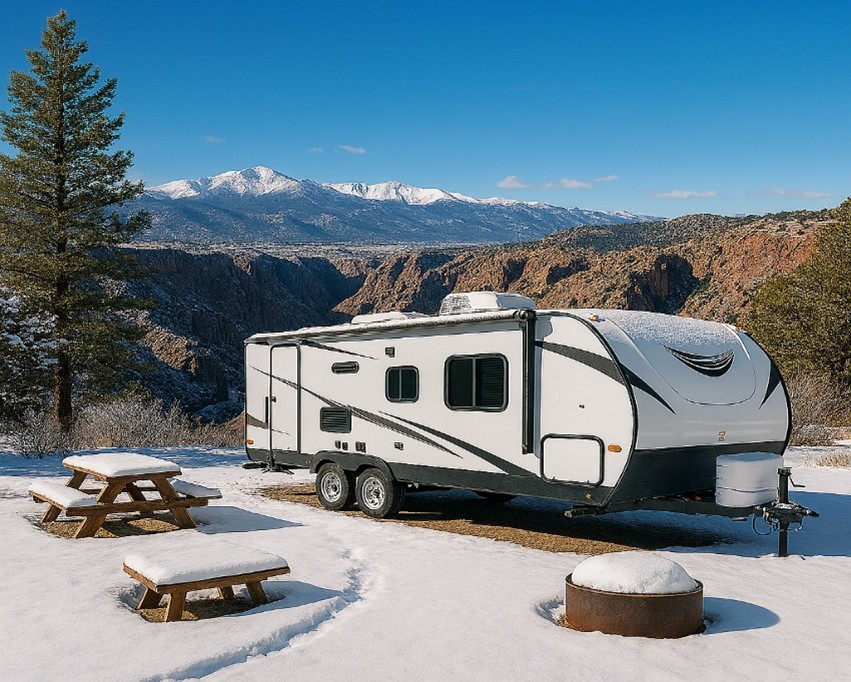
Winter RV travel can be magical — quiet roads, snow‑dusted landscapes, and crisp mountain air create a peaceful atmosphere you won’t find in peak season. But traveling in cold weather also brings unique challenges of winter RV travel that every RVer should be prepared for. Whether you’re heading toward the Royal Gorge region or exploring other winter destinations, these essential safety tips will help you stay warm, safe, and confident on the road.
Prepare Your RV for Cold Weather
Before you hit the highway, make sure your RV is ready for freezing temperatures. Check your insulation, seal any drafts around windows and doors, and inspect your furnace to ensure it’s working efficiently. If your RV isn’t a four‑season model, consider adding temporary insulation like Reflectix, foam board skirting, or thermal curtains to help retain heat. The challenges of winter RV travel include keeping your living space warm and free from heat loss.
Protect Your Water System
Frozen pipes are one of the most common winter RV issues — and one of the most expensive to fix. Use a heated water hose, insulate your freshwater lines, and keep your gray and black tank valves closed until you’re ready to dump. If temperatures drop extremely low, consider using your onboard water tank instead of a direct hookup to reduce freeze risk. Addressing frozen water lines is one of the typical challenges of winter RV travel.
Monitor Road and Weather Conditions
Winter weather can change quickly, especially in mountainous areas. Check forehttp://www.cotrip.orgcasts frequently, watch for road closures, and avoid traveling during active storms when possible. Keep an emergency kit in your RV that includes blankets, food, water, a flashlight, and a fully charged power bank. Above all, remember the challenges of winter RV travel can be reduced with careful planning and preparation.
Drive Slowly and Smoothly
Snow and ice require a different driving style. Accelerate gradually, brake gently, and increase your following distance. If your RV is equipped for it, carry tire chains and know how to install them. When in doubt, wait it out — no destination is worth risking icy roads.
Manage Heat and Ventilation
Staying warm is important, but so is preventing condensation. Run your furnace or space heaters safely, crack a window during cooking or showering, and use dehumidifiers to keep moisture under control. A dry RV is a warmer RV.
Plan Your Overnight Stops
Choose campgrounds or RV parks that remain open year‑round and offer reliable power. Many RV Parks remain seasonal in colder climates to reduce damage to their infrastructure. Winter nights can be long and cold, so having access to electricity for heating is a major advantage. Arrive before dark whenever possible — setting up in freezing temperatures is never fun.
Stay Flexible
Winter RV travel rewards those who stay adaptable. If a storm rolls in, extend your stay. If roads look questionable, take the scenic route or wait for conditions to improve. Flexibility is one of the best safety tools you have. When all else fails ask a local about current road and traffic conditions.